


 Book a Free Demo

Job Orders from Parties
Fabric or yarn received on the party’s challan, weighed and logged as a lot with the processes, shade and delivery date the party asked for.
 Software for Dyeing and Processing Houses
Textile processing software for dyeing, bleaching, printing and finishing houses: lots received from parties, recipes and chemical use per batch, machine plans, shade approvals, water and effluent records and job-work billing with GST.

Each lot keeps its identity, its recipe, its loss and its cost from inward weighing to delivery challan.
Fabric or yarn received on the party’s challan, weighed and logged as a lot with the processes, shade and delivery date the party asked for.
Routes such as scouring, bleaching, dyeing, soaping, softening, compacting or printing defined per quality, with each lot moving stage by stage.
Shade recipes with dyes and auxiliaries, lab dip versions, shade approvals from the party and recipe history for every colour.
Dyes and chemicals issued per batch from the recipe, actual against standard, store stock with reorder levels and cost per kilo processed.
Batches planned on soft flow, winch, jigger, jet or yarn dyeing machines by capacity, shade sequence and delivery date, with status per machine.
Re-dyes, corrections and shade rejections recorded with reason and cost, and process loss per lot reconciled before delivery.
Water intake, recycling and discharge readings, treatment plant logs, reject, salt and sludge records, kept in order for inspections.
Rates per kilo or metre by process and party, delivery challans, job-work invoices at the applicable GST rate, e-way bills and party outstanding.
Dye, chemical, steam, power, water and labour cost per kilo against the rate charged, by party, process and machine.
Weights, recipes, meter readings and bills share one lot record, so the loss and cost of each lot can be proved.
We show you working software at every stage, and your team is trained before the switch-over.
We study your current process, documents, reports and pain points, free of charge.
Requirement documentWe design the screens, workflow and reports, and review them with your team.
Approved designWe develop module by module and demo each one, so feedback comes early.
Working modulesWe import your masters and opening balances and train every user.
Trained teamWe run the first days with you on site or online, then support you under an AMC.
Live system
A processing unit rarely owns the material it works on. Parties send fabric or yarn, expect it back in the right shade, weight and time, and question every kilo of loss. Margins depend on dye and chemical use per batch, which is hard to see when recipes live in a notebook in the lab.
Textile processing software keeps each party’s lots, recipes, costs and compliance records in one place. It connects to our textile ERP when the same group also runs knitting, weaving or garment units.
Processing is where much of the fabric’s value is added and where many disputes arise. Textile processing software earns its place by making loss, shade and cost traceable to each lot.
Every receipt from a party is weighed and given a lot number linked to the party’s challan, fabric quality, required shade and process. Rolls can be labelled at inward, so the lot keeps its identity through every machine and back to the delivery challan. Fabric that arrives short against the party’s challan is noted at the gate, before any processing, so a shortage that was never received is not blamed on the dyehouse.
The lab develops a recipe for each shade, with versions as it is corrected. Once the party approves the shade, the approved recipe goes to production with quantities scaled to the batch weight and liquor ratio. When a batch needs a correction, the addition is recorded, so the next time the same shade runs, the recipe starts closer.
Batches are planned per machine by capacity and shade order, so light shades run before dark ones and washing between batches is reduced. Supervisors see what is loaded, what is next and which party deliveries are at risk. Planned and actual batch times are compared, so slow cycles, long loading times and machines that need maintenance stand out within a few weeks.
Dyeing and bleaching units work under consent conditions from the state pollution control board, and in some clusters under zero liquid discharge conditions. The software keeps daily water intake, recycling, effluent treatment, reject and sludge records, so the logs needed for inspections and consent renewals are complete and consistent.
Job-work rates are set per party, process and quality. Delivery challans and invoices are raised from the lot record with GST at the rate that applies to the job work, and e-way bills where needed. Cost per lot, from actual dyes, chemicals, steam, power and water, shows which parties and shades make money. Rate revisions carry an effective date, so each lot is billed at the rate agreed for the period in which it was received.
Included items are part of the standard system. Optional items are quoted separately when you need them.
| Item | Details | Status |
|---|---|---|
| Requirement study | Inward, lab, machines, effluent plant and billing walked through | Included |
| Party job orders and lots | Inward with weights, rolls and challans | Included |
| Process routes | Stage-wise movement and process loss | Included |
| Lab and recipes | Lab dips, approvals and recipe versions | Included |
| Dyes and chemicals store | Issue per batch, stock and reorder levels | Included |
| Machine scheduling | Batch plan per machine and shade sequence | Included |
| Water and effluent logs | Intake, recycling, treatment, reject and sludge | Included |
| Job-work billing | Challans, GST invoices, e-way bills, outstanding | Included |
| Dosing and instrument data | Import from dosing systems or lab instruments where supported | Optional |
| Party portal | Lot status and delivery details for parties | Optional |
| Training and go-live | Lab, production, stores and office | Included |
| Source code | Full code and database handed over | Included |
Third-party charges, such as payment gateway fees, SMS or WhatsApp credits and e-invoice API fees, are shown separately at cost.

We have built custom software for businesses in Coimbatore, across India and abroad since 2007. Our own Coir ERP runs in coir factories every day.

After delivery and payment, the source code and database are yours. No licence per user, no lock-in.

GST, e-invoicing, e-way bills, TDS, PF and ESI are built into the system, not bolted on.

1000+ projects delivered, including ERP, billing, inventory and payroll systems that are still in daily use.

Visit us in Coimbatore or call, email or WhatsApp us Monday to Saturday, 9:30 AM to 6:30 PM IST.
Live websites and systems our team built, which you can open and check yourself, and what our clients say about working with us.
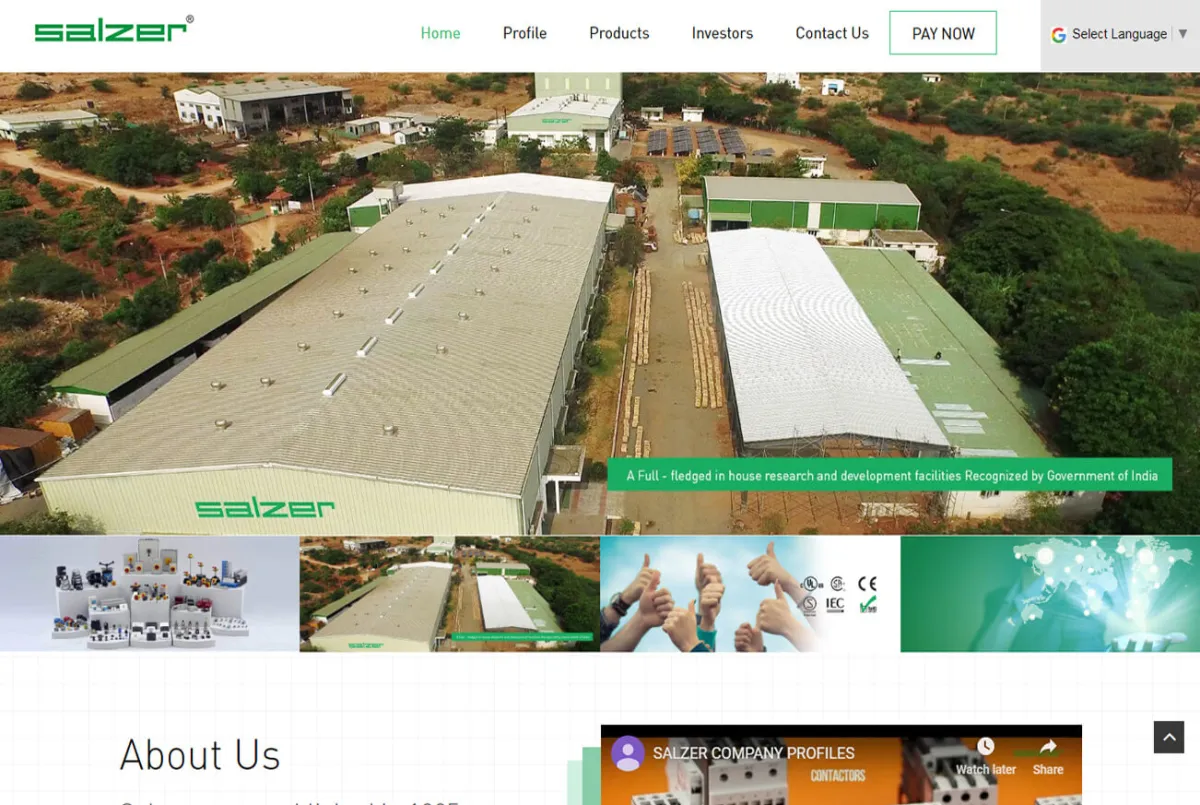

Export Engineering Website
Visit live site: vishalprecision.com Read the case study
Defence Corporate Portal
Visit live site: mdl-india.com Read the case study
Dynamic Corporate Website
Visit live site: skytechgroup.net Read the case study“We needed a website to impress European buyers. Samantha Technologies delivered exactly that — professional, technically detailed, and credible. Our international enquiries have grown 6x since the new site launched.”
“The website Samantha Technologies built for us is outstanding. Professional design, fast loading, and it ranks well on Google for our products. Our enquiries have tripled since launch. Excellent team and great communication throughout.”
“A professional, secure institutional website was essential for us. Samantha Technologies delivered exactly that — credible design, dynamic content management, and strong performance.”
59 live client websites in our portfolio, including clients in Germany, Bahrain, UAE, Kuwait, UK.
We serve businesses across India, the Gulf, Singapore, the UK and the US. Each city page covers the industries, tax rules, payment methods and languages that apply there.
Book a free demo. We walk through the system with your data and send an itemised quote within one business day.


