


 Get a Free Consultation

Process Capability Pages
Machining, forging, casting, pressing, welding, heat treatment or assembly, each with the machines, size envelope and materials you actually handle.
 Websites for Auto Component Makers
OEM and Tier 1 supplier development teams shortlist new vendors from their websites before any plant visit. An auto component manufacturer website has to show your processes, machines, quality system and part families in the terms a buyer’s checklist uses, and turn a request for quotation against a drawing into a clean enquiry.

Buyers judge a component supplier on process capability and quality discipline. The site is built around those two things.
Machining, forging, casting, pressing, welding, heat treatment or assembly, each with the machines, size envelope and materials you actually handle.
Shafts, housings, brackets, gears, fasteners or sheet metal parts grouped into families a buyer recognises, with photos and typical applications.
Inspection facilities, measuring equipment, control methods and the certifications you hold, written in specific terms rather than general promises.
A page explaining the documents you produce for new parts, such as control plans, inspection reports and material certificates, without publishing confidential customer data.
A login area where approved buyers download drawings acknowledgements, certificates and reports you choose to share, kept away from public pages.
A request for quotation form that takes drawings, material, annual volume and target dates, so your estimator gets what he needs first time.
Plant layout, shop floor photographs, capacity and location details, which is what a vendor audit looks at first.
Named promoters and key people with their background, so a buyer knows who stands behind the company.
SEO for the process and part searches buyers make, such as precision machined components or CNC turned parts, not only your company name.
Public pages build trust; the secure area and RFQ form handle the detail.
We start from the questions your customers’ supplier development teams ask.
We look at your products, buyers and current site, and agree what the website must do.
Written scopeProduct data, specifications, photos and downloads are collected and organised with your team.
Approved sitemapPages are designed, built and reviewed by you in stages on a test link.
Working websiteSpeed, mobile, forms and tracking are checked, and product pages are submitted to Google.
Live and indexedUpdates, backups and new products added under a support plan.
Kept current
When a buyer is looking for a second source or a new supplier for a part family, the first filter is often a web search and a look at the shortlist’s websites. A site that only shows a photo gallery says little. One that shows process capability, size envelopes, inspection equipment and how you handle new part approvals gets the RFQ.
This page is about the website. For the ERP side, with OEM schedules, heat-to-box traceability and PPAP records inside the plant, see our auto component ERP and ERP for CNC and precision machining. For our wider approach, see website design for manufacturers.
Supplier development teams follow a checklist. The website should answer it in the order they ask.
Buyers first check that your processes match the part. Each process page should state the machines, the size and weight envelope, the materials and the tolerances you routinely hold, using your real figures. Part families then show examples of what those processes produce. We did this for TQ Teknologies, a Coimbatore precision manufacturer, by organising products into families and processes into addressable groups. Read the TQ Teknologies case study.
Next comes quality. A good quality page names the inspection equipment, the stages at which parts are checked, how non-conforming parts are handled and which certifications you hold. If you are certified to a standard such as IATF 16949 or ISO 9001, it is shown with the certificate; if you are working towards one, the page says so plainly.
Automotive customers ask for a defined set of documents before approving a new part, and each customer’s requirements differ. The website does not publish those documents. It explains that you produce them, such as control plans, dimensional reports and material certificates, and offers a secure login area where approved customers can download what you choose to share.
Buyers want to know that you can hold quality across volume. Capacity figures, plant locations and a clear contact route answer that. MDL India, a die set manufacturer, published its machining and grinding envelopes and a CAD download library on the site we built; see the MDL India case study.

We have built capability and export websites for precision manufacturers including TQ Teknologies, MDL India and Vishal Precision, since 2007.

Websites for Coimbatore manufacturers since 2007, from corporate sites to export catalogues.
Every product page ends in an enquiry route, and every enquiry is tracked to the page it came from.
Domain, hosting, code and content stay in your company’s name.

Our office is in Gandhipuram. Call, WhatsApp or drop in, Monday to Saturday.
Live websites and systems our team built, which you can open and check yourself, and what our clients say about working with us.
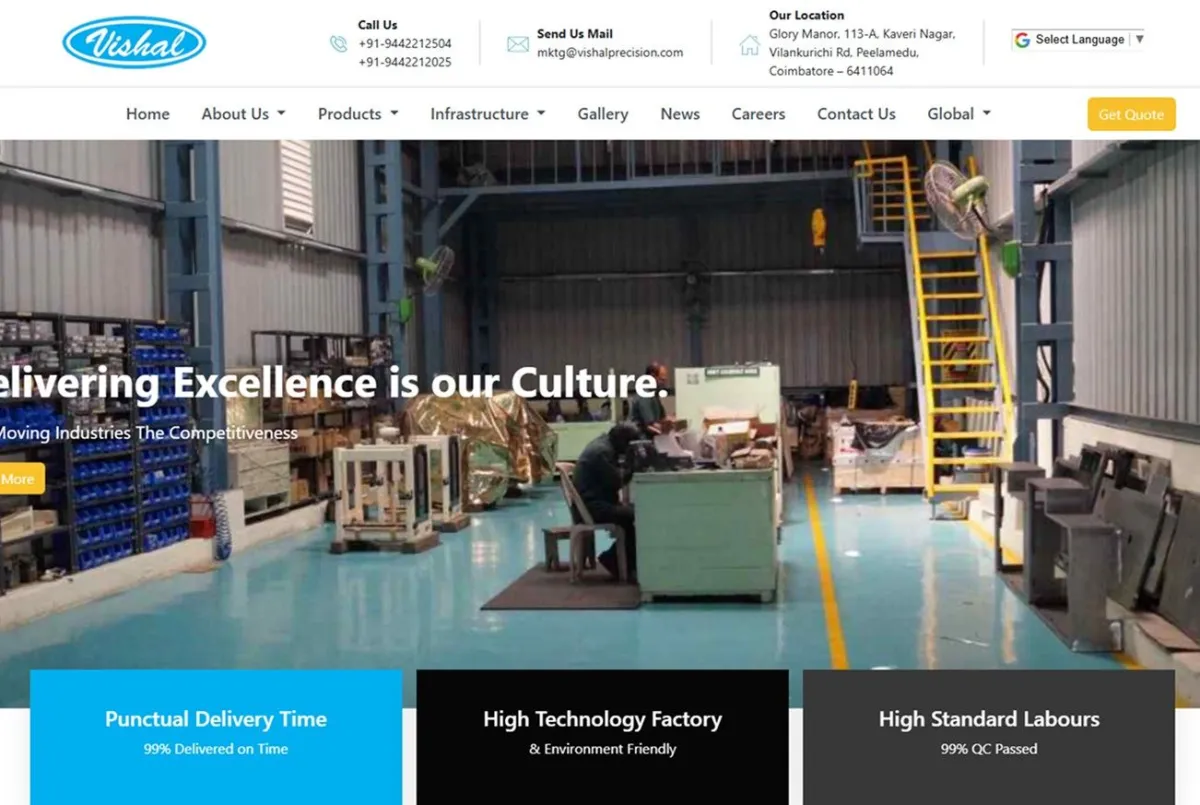
Export Engineering Website
Visit live site: vishalprecision.com Read the case study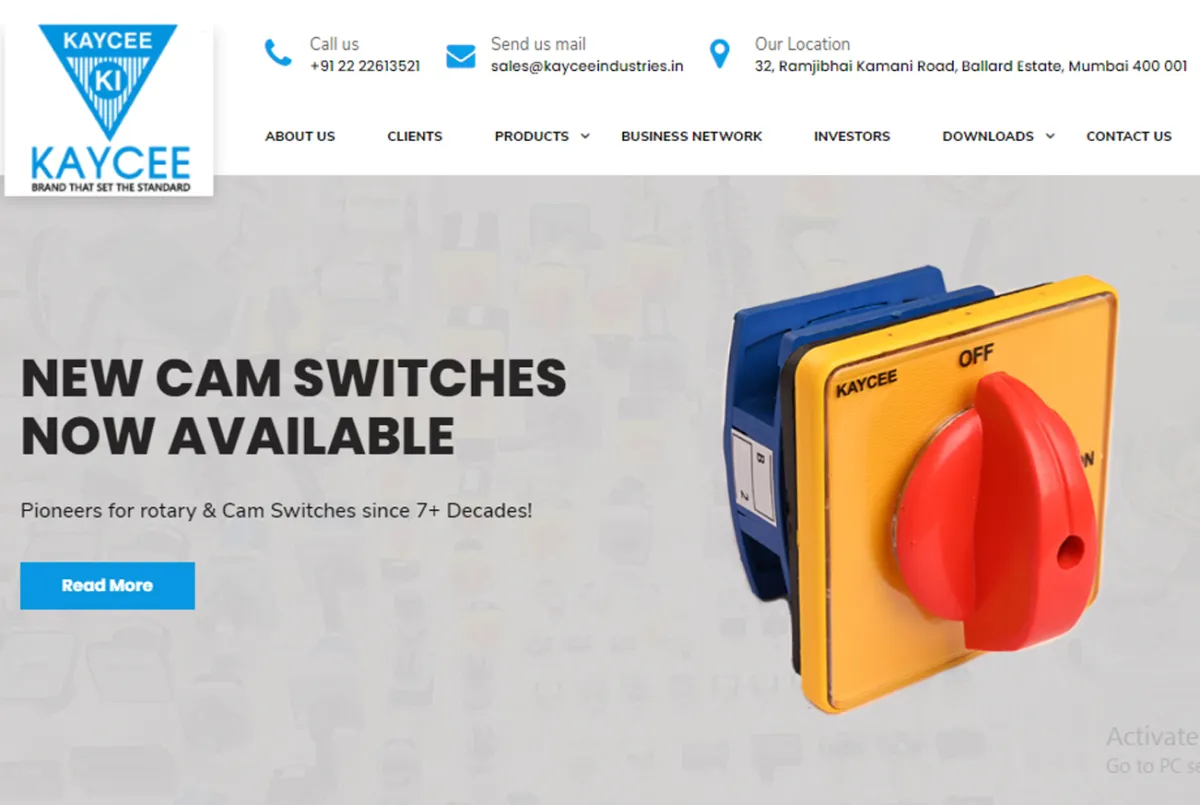
B2B Industrial Website
Visit live site: kayceeindustries.com Read the case study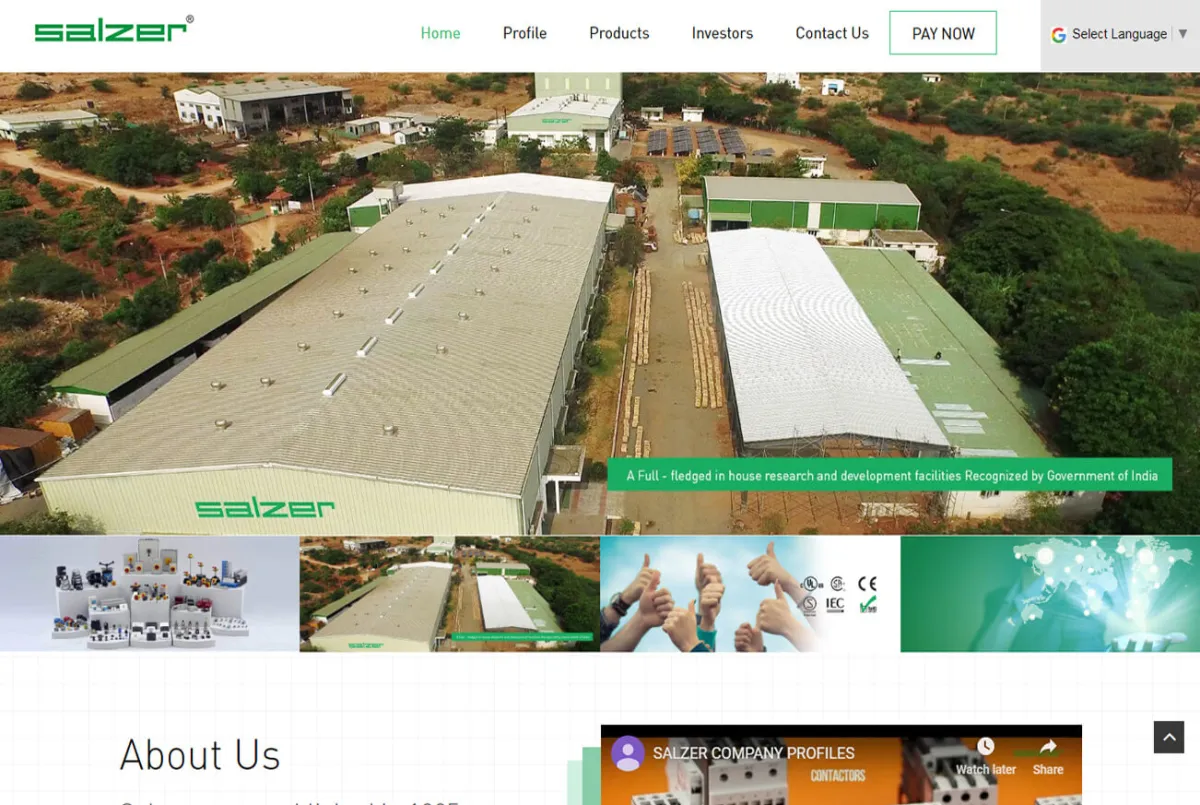
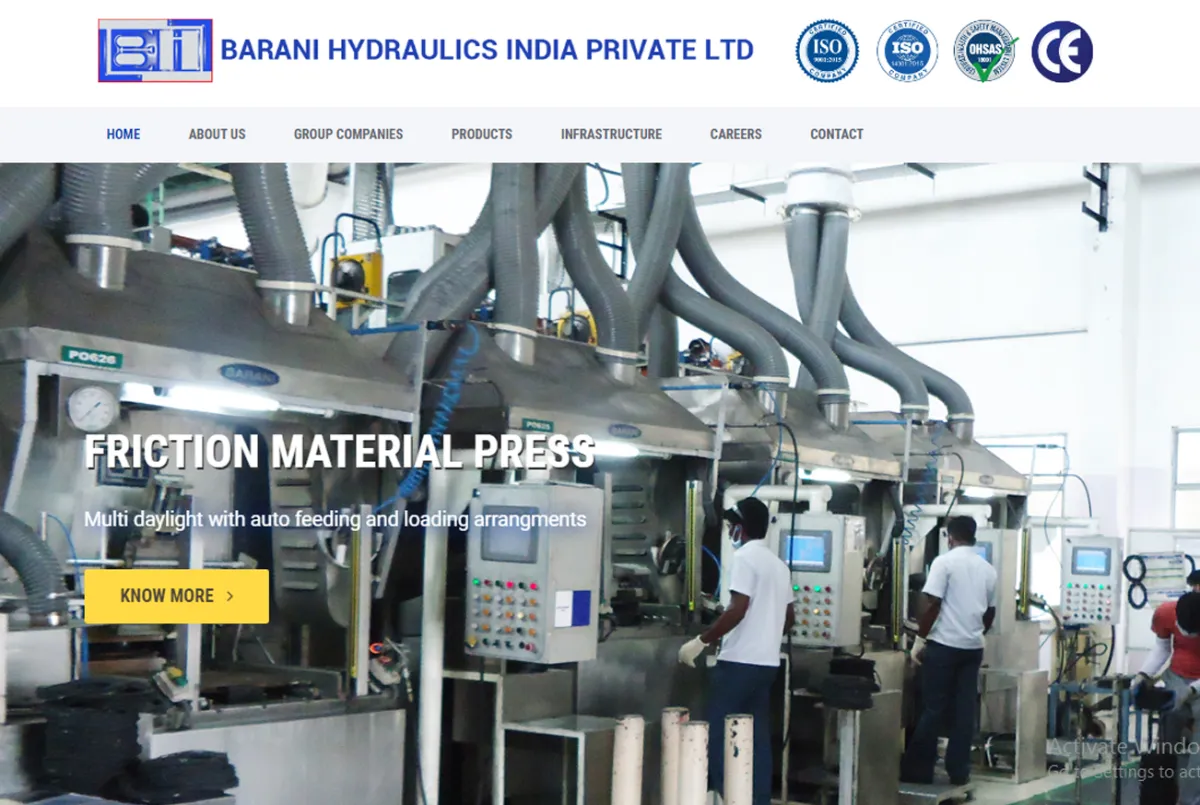
Dynamic Corporate Website
Visit live site: bhipl.in Read the case study“Our Google rankings improved dramatically within 3 months of working with Samantha Technologies. We now appear on page 1 for our key product searches. The ROI has been exceptional — highly recommend their SEO services.”
“The website Samantha Technologies built for us is outstanding. Professional design, fast loading, and it ranks well on Google for our products. Our enquiries have tripled since launch. Excellent team and great communication throughout.”
“We needed a website to impress European buyers. Samantha Technologies delivered exactly that — professional, technically detailed, and credible. Our international enquiries have grown 6x since the new site launched.”
59 live client websites among the 64 projects in our portfolio, including clients in Germany, Bahrain, UAE, Kuwait, UK.
A free consultation on your component website, followed by a clear scope and quote.


